
By Peter Zoehrer
There are books you read for information, and there are books that leave you questioning how such horrors could occur in a modern democratic nation. Toru Goto’s autobiography, Battle for Survival: 4,536 Days in Captivity, belongs firmly to the second category.
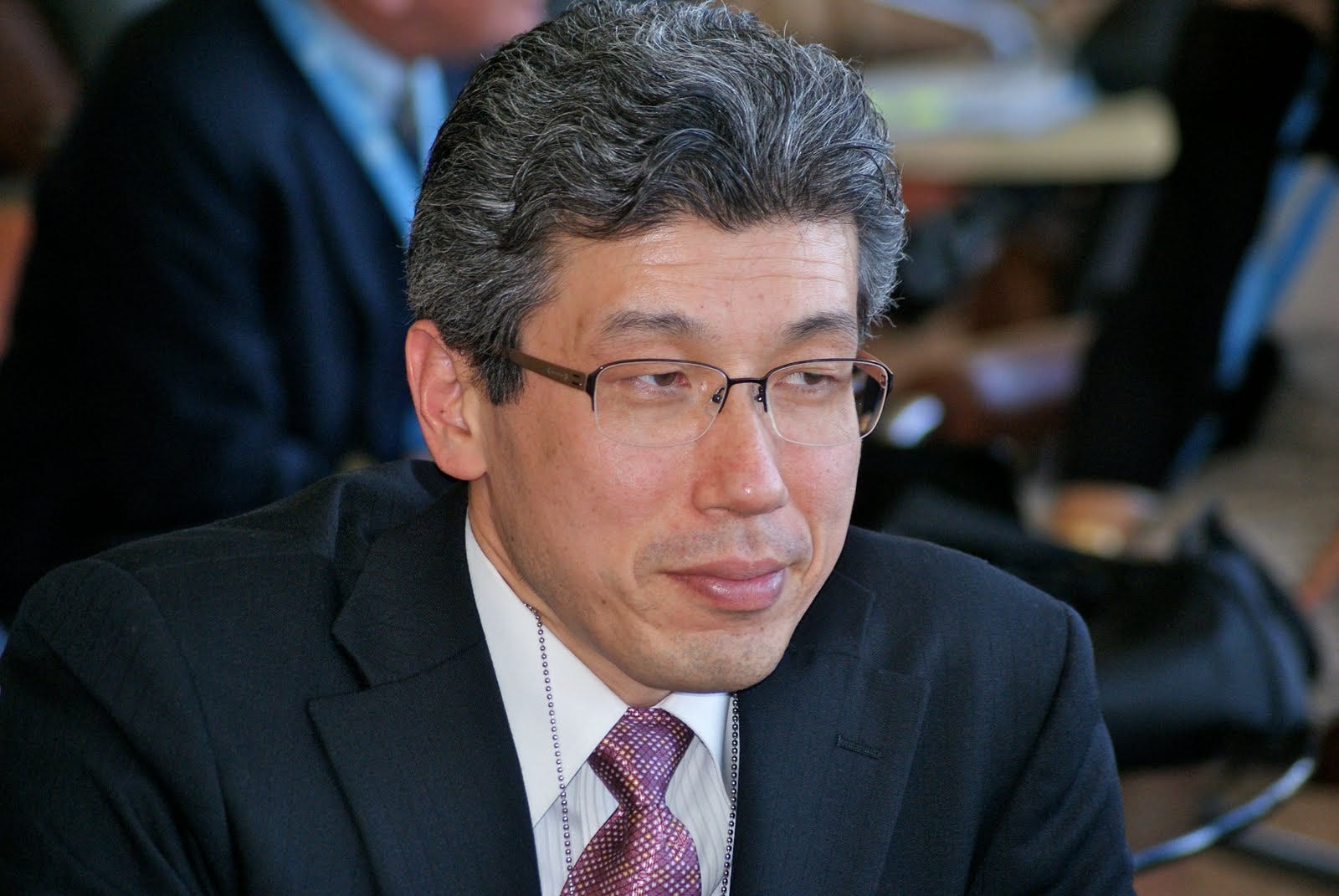
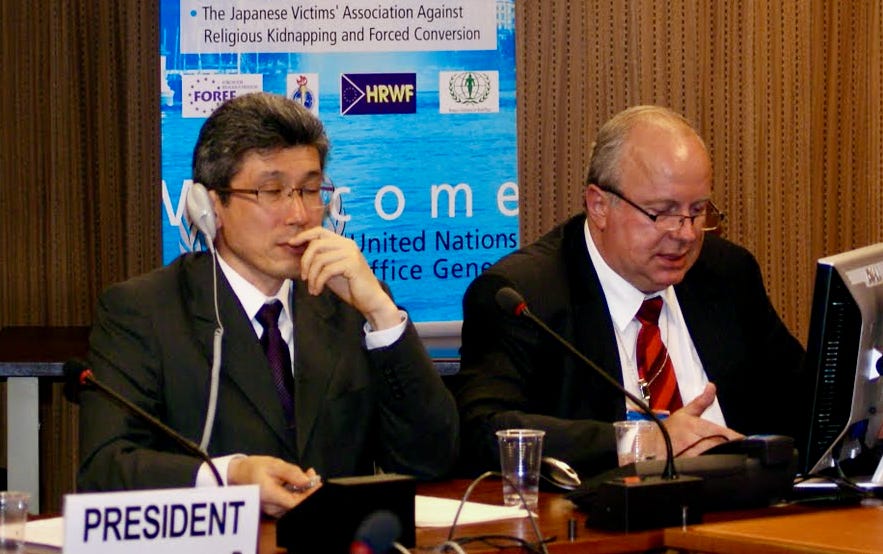
My path of international advocacy against this systematic, hidden atrocity reached a critical turning point in June 2010. During the 14th Session of the UN Human Rights Council in Geneva (June 1–2, 2010), I met Toru Goto for the very first time. Seeing him stand before international human rights defenders to bear witness to his ordeal left an indelible mark on me. Toru will forever be not only my dear friend, but my personal hero—a man who set an unmatchable standard of unshakable faith, spiritual resistance, and human resilience.
Shortly after our meeting in Geneva, our international campaign gathered further momentum. From August 1–5, 2010, I stood in a conference room in Tokyo alongside nine leading European human rights experts whom I had invited to conduct an intensive fact-finding investigation. Among our delegation was Dr. Aaron Rhodes, then President of FOREF Europe (Forum for Religious Freedom Europe), and Willy Fautré, Executive Director of Human Rights Without Frontiers (HRWF).
The Tokyo conference brought together global defenders of religious liberty and a courageous group of Japanese victims who had survived abduction and forced deconversion. Listening to victim after victim recount being snatched off the street or ambushed by their own families was profoundly jarring. What we uncovered shocked us to our core.
Since the late 1960s, more than 4,300 Japanese citizens—predominantly young women—had been abducted, locked away in secret apartments, and subjected to brutal psychological and physical coercion to abandon their faith. For decades, Japanese law enforcement had turned a blind eye, dismissing these violent detentions as “private family disputes” while professional deprogrammers and complicit ministers turned forced apostasy into a lucrative, multi-million-dollar industry.
Chief among these survivor testimonies was an ordeal so extreme it stretched the limits of what seemed humanly survivable—the story of Toru Goto.

Twelve Years Behind Locked Doors
On September 11, 1995, Toru Goto was a vibrant 31-year-old university graduate. He had a job, plans for the future, and a deep commitment to his faith in the Unification Church, which he had joined years earlier after an intense personal spiritual search.
That evening, following what seemed to be an ordinary family gathering, the atmosphere suddenly froze. Relatives working in collusion with a professional “faith breaker” ambushed him, physically overwhelmed him, and forced him into a waiting minivan. He was taken first to an apartment in Niigata and later to a high-rise flat near Ogikubo Station in Tokyo.
Every door and window was outfitted with heavy-duty deadbolts controlled entirely from the outside. There was no telephone, no access to news, and zero line of communication to the outside world. When Toru protested that his basic constitutional rights were being violated, his family made their demand chillingly clear: he would not leave until he renounced his faith.
“This is not abduction. This is protection. And we will bring this to a conclusion no matter what sacrifice it takes. Prepare yourself.”
— Captors’ message to Toru Goto upon locking the apartment deadbolts
He had no way of knowing that he would not walk free again until he was 44 years old.
During the years Toru was confined, the world outside transformed beyond recognition. The Berlin Wall had fallen only six years before his captivity began; as the years bled into a decade, the internet reshaped human communication, mobile phones spread globally, and geopolitical landscapes shifted dramatically. Japan held nineteen national elections.
Toru saw none of it. For 4,536 consecutive days, his entire existence was reduced to locked rooms, constant surveillance, and relentless psychological interrogation.
Professional deprogrammers and former members rotated through the apartment, screaming abuse at him for hours at a stretch, calling him “Satan” and a “monster”. When he cited the freedom of religion guaranteed by Article 20 of the Japanese Constitution, lead deprogrammer Takashi Miyamura sneered:
“You have no human rights. You have no qualification for human rights.”
— Lead deprogrammer Takashi Miyamura to Toru Goto
When Coercion Pretends to Be Rescue
To understand how such an ordeal could continue for over twelve years in a modern democracy, one must look at the deceptive mechanics of deprogramming—and the societal silence that protects it.
The term “deprogramming” sounds almost clinical, suggesting that a person’s mind has been “programmed” like a machine and merely needs fixing. But once a person’s genuine religious convictions are dismissed as mere brainwashing, their fundamental human agency is stripped away. Private imprisonment is then twisted into an act of parental love, and coercion is reframed as rescue.
This practice was fueled and shielded by an almost impenetrable firewall within Japanese media. For decades, major news outlets uncritically collaborated with the official narrative, running repetitive smear campaigns against non-traditional religious groups.
By framing minority faiths as dangerous anomalies rather than protecting the individual constitutional rights of their adherents, the media created a climate of suspicion where public empathy vanished.
This hostility towards minority faiths has deep historical roots in Japan. From the brutal 17th-century persecutions under the Tokugawa Shogunate—where Christian missionaries and thousands of Japanese converts were publicly crucified and tortured for refusing to renounce their beliefs—to the modern era, non-traditional religious movements have often faced intense cultural resistance. Even today, practicing Christians make up barely 1% to 2% of the total population, remaining a perpetual minority in a society that deeply emphasizes conformity.
Exploiting this environment of public hostility and media indifference, Toru’s captors shifted tactics from intense verbal abuse to extreme physical neglect. Food was routinely withheld, forcing him to creep into the kitchen late at night to eat raw vegetable scraps out of the wastebin just to stay alive. He undertook prolonged hunger strikes to protest his illegal detention, pushing his body to the absolute brink of death.
Yet, even as his physical frame withered, his internal spiritual resolve became unbreakable.
The Night the Door Opened
On February 10, 2008, after 12 years and five months, Toru’s captors finally realized they could never break his conviction.
There was no sudden police raid or dramatic escape. His family simply opened the door and ordered him to leave. They provided no money, no phone, and no support.
Wearing a threadbare sweater and barely able to stand, Toru stepped into the winter cold at age 44—weighing just 39 kilograms (86 pounds).
He attempted to walk toward church headquarters ten kilometers away, but his legs, severely damaged by years of muscle atrophy, collapsed on the frozen pavement. A passerby recognized his extreme distress, realized he was a fellow believer, and hailed a taxi to carry him to safety.
Upon arrival, staff members had to carry his skeletal frame inside. Rushed directly to the emergency room, doctors diagnosed him with severe malnutrition, systemic organ weakness, anemia, and disuse muscle atrophy. Photos taken in his hospital bed shortly after his release show a man reduced to skin and bones—looking like a survivor of a wartime concentration camp.

Breaking the Silence: The International Turning Point
In the wake of our Tokyo conference, Human Rights Without Frontiers (HRWF) took the decisive leading role in launching an exhaustive, multi-year investigation. Following the event, Patricia Duval, a distinguished French human rights attorney, engaged in extensive legal research and fact-finding missions to Tokyo, analyzing the systemic complicity of police and legal institutions.
The culmination of HRWF’s groundbreaking work was a landmark 115-page report that meticulously documented the illegal abductions and forced deconversions occurring across Japan.
Publication was only the beginning. We launched an aggressive, coordinated international advocacy campaign to get this report into the hands of key decision-makers. Joining forces as key campaign partners, Dan Fefferman and the International Coalition for Religious Freedom (ICRF) in the United States worked alongside FOREF and HRWF to organize high-level side events at the United Nations in Geneva, congressional briefings, and meetings at the U.S. State Department.
This relentless global pressure finally broke through the media wall and the institutional deadlock. Armed with HRWF’s definitive report, formal statements from the UN Human Rights Committee, and critical findings from the U.S. Commission on International Religious Freedom (USCIRF), Japanese authorities, legal apparatuses, and mainstream media could no longer ignore the atrocities or brush them aside as private family matters.
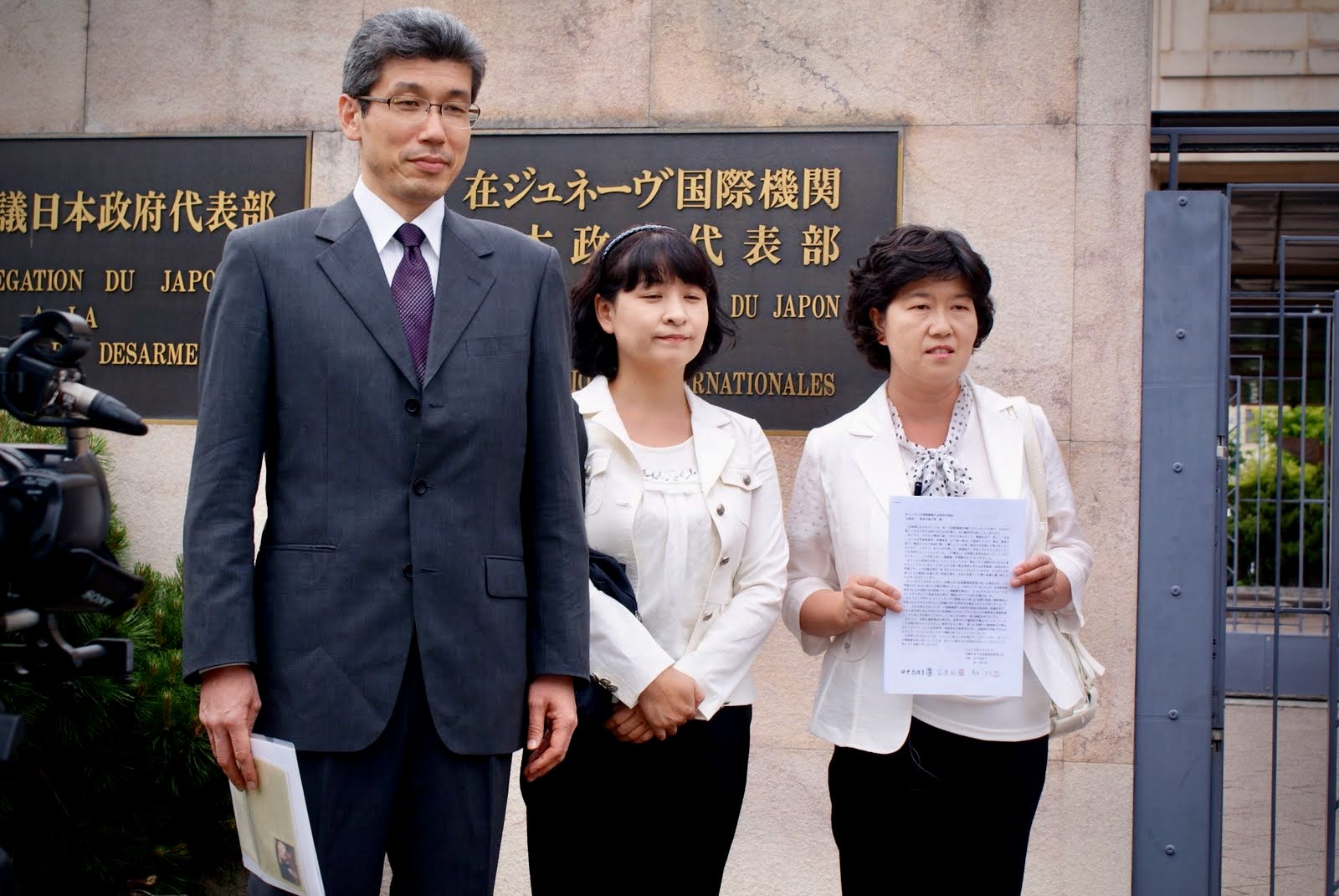
Toru later personally confirmed to me that this international advocacy was the final straw—the decisive force that cracked the wall of silence and brought the decades-long practice of systematic deprogramming in Japan to an end.
Determined to secure legal justice for all victims, Toru filed a historic civil lawsuit against his captors and the deprogrammer Takashi Miyamura. In 2014, the Tokyo High Court issued a momentous ruling, declaring his 12-year confinement unlawful and ordering substantial damages. On September 29, 2015, the Japanese Supreme Court dismissed all final appeals, making the landmark judgment permanent.
Shortly after that final victory, I opened my computer and found a simple, one-sentence private message from Toru on Facebook:
“Dear Peter, I won in the high court—thank you for your help.”
— Toru Goto’s private message to Peter Zoehrer
Reading those words, tears welled in my eyes.
Toru’s refusal to surrender dealt a decisive blow to the faith-breaking industry in Japan, protecting thousands of innocent men and women from ever enduring the nightmare he lived.
Why You Must Read His Book
Today, Toru Goto serves as Representative Director of the Association for Victims of Deprogramming, continuing his life’s work to defend religious freedom and basic human dignity.
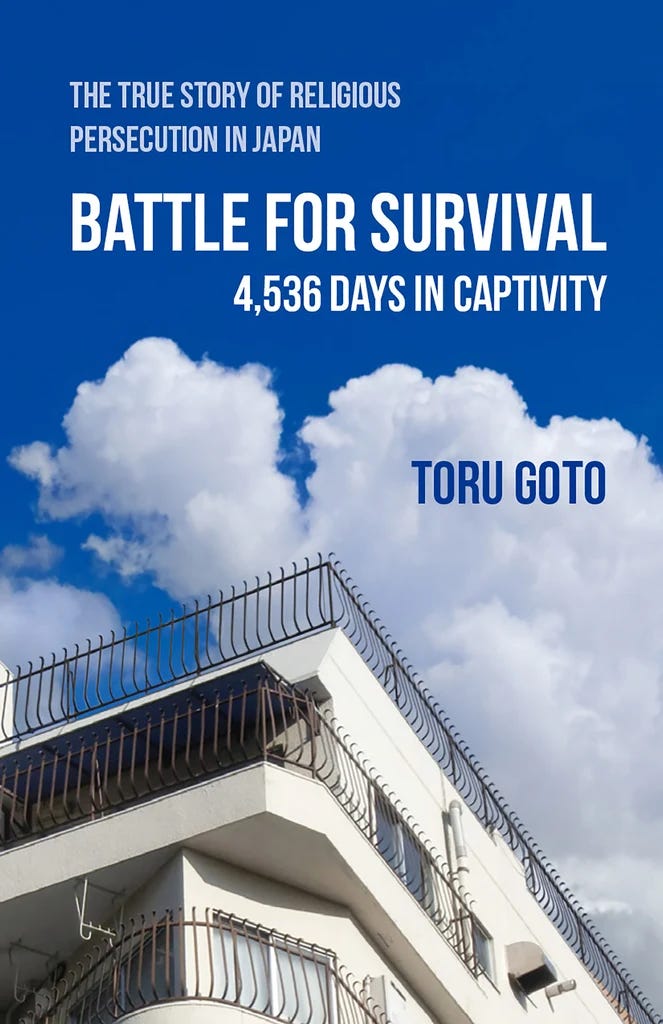
His autobiography, Battle for Survival: 4,536 Days in Captivity, is now available.
You do not need to share Toru Goto’s theological beliefs to understand the vital importance of his story. Article 18 of the Universal Declaration of Human Rights protects the right of every human being to hold their beliefs without fear of private imprisonment or physical coercion.
Article 18 protects not simply the freedom to belong to an approved religion—it protects the fundamental freedom never to be forced to surrender your conscience.
This book is far more than a record of persecution; it is an extraordinary blueprint of spiritual survival, a masterclass in psychological resilience, and a testament to the unyielding power of the human conscience when everything else is stripped away.
I urge all of my Substack readers and friends to purchase a copy on Amazon today. By reading his story, you honor a true living hero—and help ensure that the world never forgets what happened in the dark, and how faith ultimately conquered it.
How does Toru’s courage under pressure speak to your own understanding of personal freedom and resilience? I would love to hear your thoughts in the comments below.
Recommended Sources & Links
• Toru Goto’s autobiography: Battle for Survival: 4,536 Days in Captivity (Amazon | ISBN: 978-1-955414-15-9)
• HRWF Special Report: Coercive Change of Religion in Japan — the landmark 115-page investigation on abductions and forced deconversions.
• Bitter Winter: Human Rights and Religious Liberty in Japan — in-depth coverage of forced deprogramming and court decisions.
• FOREF Europe Official Website — Forum for Religious Freedom Europe statements, international delegations, and press releases.
• USCIRF Official Report: Coercive Deprogramming and Forced De-Conversion in Japan — Official U.S. government documentation highlighting the 12-year confinement of Toru Goto.
• UN Human Rights Office (OHCHR): UN Human Rights Committee Findings on Article 18 Violations in Japan — International interventions addressing forced religious deconversion and state inaction under the ICCPR.
#ReligiousFreedom #HumanRights #ToruGoto #Substack #BookRecommendation #Japan #FreedomOfConscience #FOREFEurope #HRWF #BitterWinter #Resilience #FaithAndCourage
If you value my independent work on religious freedom, media ethics, and press freedom, every contribution makes a real difference.
If you appreciated this piece, feel free to buy me a coffee ☕